
 zappi
 zappi GLO
 eddi
 libbi 2
 app
 harvi
 extras
zappi
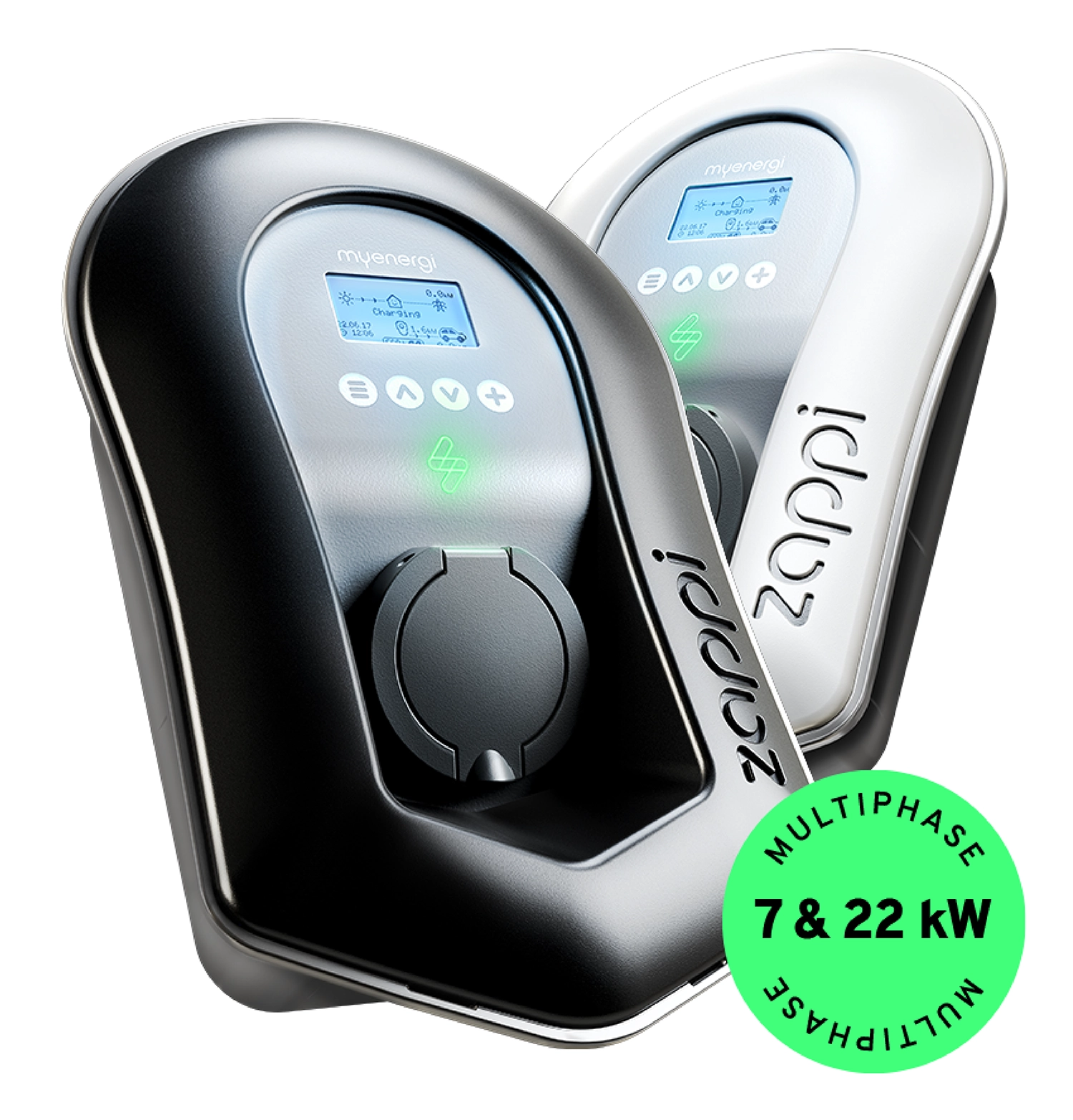


Our latest innovation, the zappi multiphase, brings flexible charging options to suit diverse needs. With selectable power settings of 7kW and 22kW, this charger adapts seamlessly to single or three-phase electrical setups, delivering efficient, high-speed charging tailored to every user’s setup.
Aligned with myenergi’s commitment to sustainability, the zappi multiphase allows for 100% green energy charging with a familiar, user-friendly design. Whether for residential or commercial use, zappi multiphase’s sleek design and intelligent functionality support eco-conscious, future-ready charging solutions—empowering you to charge smarter, cleaner, and faster.
We have brought the tethered version back!
From $1,545 includes GST

Ready to charge your electric car like a pro? Get powered up with zappi – the ultimate smart EV charger that stands out from the crowd!
Never settle for a regular EV charger when you can have zappi. Not only can it charge your car quickly and efficiently, but it also makes the most of your solar panels or wind turbine.
With zappi, you can use 100% green energy to power up your EV and comes with a bunch of awesome features that give you total control over your charging experience.
With the myenergi app, you can set timers to take advantage of cheaper electricity rates, use the boost function to speed up your charging, and even monitor all your devices from your phone!
Find an installer Find an installer
zappi product details
The simple and sustainable way to charge your EV for less, zappi can take power from the grid, from solar, or a combination of both. With three charging modes – ECO, ECO+ and FAST – the clever device continually monitors your energy use and adapts its performance to save you money with every charge.
Best of all, the device seamlessly integrates with your home energy ecosystem, offering the capability to bring microgeneration, battery storage and your time-of-use tariff together to deliver true energy independence.
Available in both 7kW (1ph) and 22kW (3ph) model variants, there’s a perfect zappi for every application.
Our 1ph model is ideal for domestic use, offering a maximum charging speed of 7.4kW and compatible with single-phase supply. Our 3ph model is suitable for properties with three-phase supply, such as workplaces, commercial buildings and some domestic settings, with faster charging speeds of up to 22kW (vehicle dependant).
Depending on your charging requirements, zappi can be specified as either a tethered or untethered unit. Our tethered models are fitted with an in-built Type 2 charging cable as standard, whereas our untethered models are supplied without – meaning you’ll need to use the charging cable that came with your EV.
As Type 2 is now the industry standard for all modern EVs, you’ll only need to specify an untethered model if you have an early Type 1 compatible vehicle.
With two colour choices available – black and grey / white and grey, we’ve made it as easy as possible to blend your charger in with its wider surroundings. Match with your front door, garage door, property facia or vehicle colour. Whichever you choose, both the front panel and charging plug will be colour paired accordingly.
3 modes of home EV charging
This mode is a mixture of both green energy and energy imported from the grid. eco mode minimises the use of grid power and can charge using 100% green energy. The charging power is continuously adjusted in response to changes in generation or power being used elsewhere in the home.
If the surplus generation drops below 1.4kw some power will be drawn from the grid to top it back up.
Charge power is continuously adjusted in response to changes in generation or power consumption elsewhere in the home. Your electric car charging will pause if there is too much-imported power, continuing only when there is surplus free power available.
In this mode, the vehicle will be charged at maximum power. This power can come from a renewable energy source or simply from the grid. The cost of charging an electric car also depends on numerous factors including mode and the car itself.
If you don’t have solar panels or wind generation, zappi will charge just like an ordinary Mode 3 charging point.

What’s in the box?
When you buy a zappi EV charger
With speed, simplicity and user friendly design in mind, we’ve thought about everything to make the installation process quick and easy, taking the weight completely off your mind.
When you open your brand new zappi EV charger, you’ll find the charger itself, alongside a clip on fascia (of your chosen colour), cable protector (tethered model only), our instruction manual, a cardboard template for mounting the unit, CT clamp with 5m cable and all required fixtures and fittings.

Simple installation
Thanks to its future-proof design and in-built WiFi connectivity, our zappi EV charger can be easily installed by a qualified electrician in less than a few hours. With no earth rod required, you simply connect to a power source, mount the device on an external wall and you’re ready to go!
Once safely fitted, you can quickly register your device, programme your settings and start charging immediately thanks to the myenergi app.
Find an installer
Charge smarter with the myenergi app
The myenergi app gives you fingertip control of your zappi – from wherever you are in the world. Adjust settings, set timers and optimise your device performance for optimum energy efficiency and minimal grid reliance.
It’s a quick and simple download that gives you total control. The ultimate solution for eco-smart EV charging.
Download the app today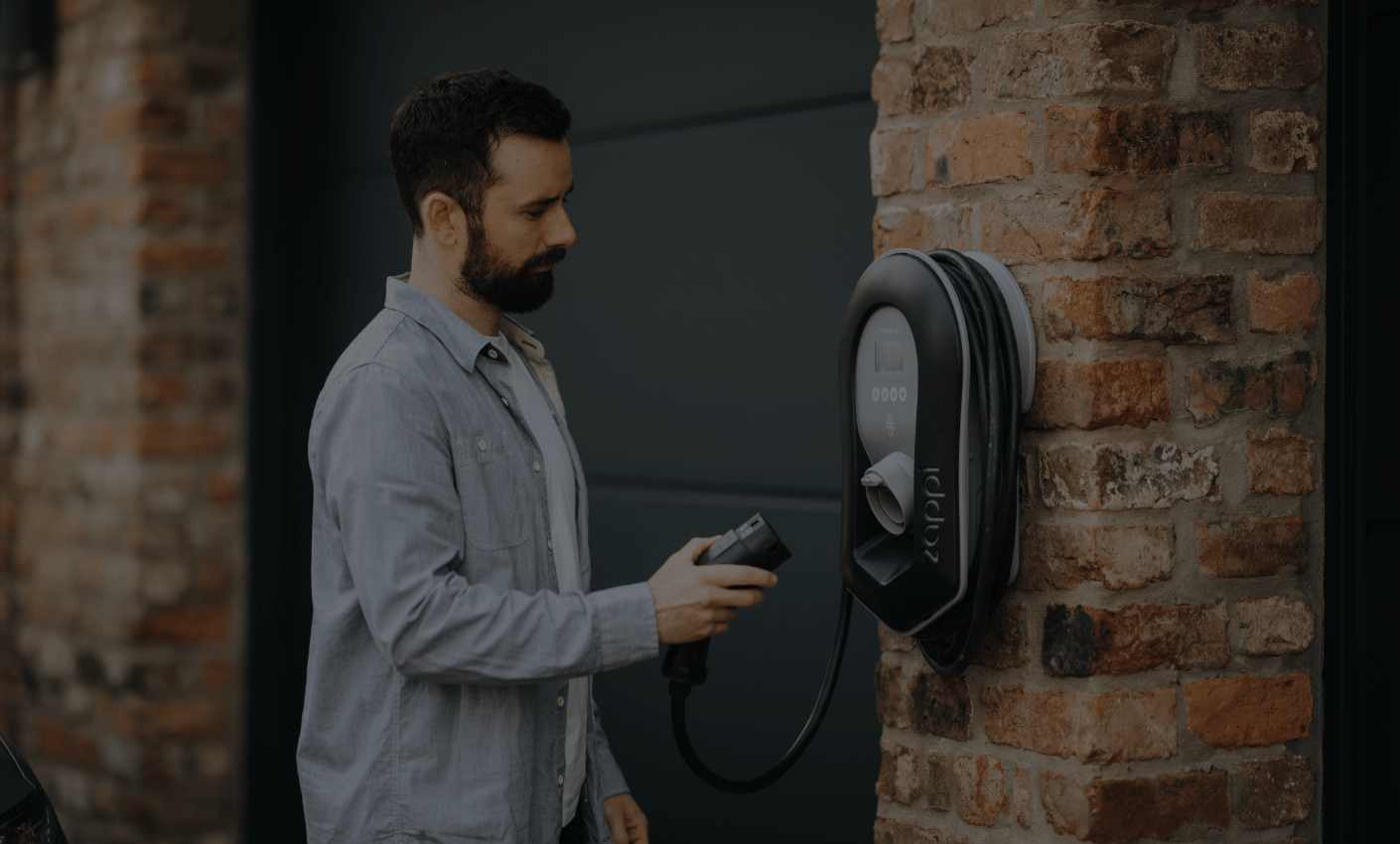
A smarter home charger
Charging at home makes owning an EV easier, cheaper and more convenient than ever before. Forget public charging – with the myenergi zappi, you simply plug in, charge up and drive off the next morning with a full battery. Thanks to a helpful choice of features, functionality and operation modes, you can charge when its cheaper, charge when its greener, or use the boost function to charge in a hurry. For more information about charging your EV on the driveway, why not check out our home charging guide.
Charging your EV at home
Support renewable energy with zappi
Stylish, sophisticated and compatible with all domestic microgeneration technologies, the myenergi zappi allows you to harness 100% self-generated renewable energy to charge your EV from the comfort of your home.
It’s the clever way to optimise your energy use, reduce your grid reliance and embrace the future.
Learn more about saving energy here
EV charger that comes with a 3-year warranty
Designed and manufactured right here at our state-of-the-art production facilities in the UK, we pride ourselves on embracing pioneering technology, delivering exceptional build quality, ensuring unmatched product reliability and offering personal customer service.
We’re so confident in our products that our zappi EV charger comes with a 3-year warranty as standard, giving you complete peace of mind. For more information, head over to our warranty page.
Product warrantyzappi Frequently Asked Questions
If you’re looking for more information about the myenergi eddi solar power diverter, we’ve created a series of expert guides. Alternatively, our product experts have answered your most frequently asked questions below.
According to the latest Electric Vehicles (Smart Charge Points) Regulations, all new EV chargers must offer smart functionality as standard. As such, your zappi requires a 24hr internet connection and won’t work without.
You can hard wire your charger via a CAT5 or CAT6 Ethernet cable, but the latest zappi also comes with built-in WiFi, so can easily connect to your router when a wired connection isn’t feasible.
The latest version of our award-winning zappi EV charger has been redesigned to offer WiFi and Ethernet connectivity as standard. This means that you no longer need to specify a hub to make your device ‘smart’.
You can now control and monitor your device from anywhere in the world and carry out firmware updates remotely. It’s a big step forward and makes charging at home even easier than ever before!
We’ve redesigned zappi to include WiFi and Ethernet connectivity as standard, which means that it doesn’t need a data cable to operate. If an Ethernet cable is not connected, zappi will automatically connect to WiFi, ensuring that you continue to receive all features and functionality.
The zappi EV charger comes with everything you need to start charging your car from the comfort of your home. As such, you’ll either find a single CT clamp with 5m cable (1pc model) or three CT clamps with 5m cables (3pc model) when you open your brand new device.
If you want to see real-time renewable energy generation displayed on your LCD screen, you’ll need an additional clamp, but these can be easily purchased from the myenergi store.
While zappi features state-of-the-art built-in surge protection and PEN fault technology as standard, wiring regulations dictate that you should still fit a surge protection device (SPD) when installing any new EV charger.
As such, while zappi does have surge protection, your installer will fit a separate SPD to ensure compliance. This means that your device will be protected from overvoltages caused by lightning strikes, power surges or voltage issues from the grid.


zappi installation and trade information
If you’d like to find out more about zappi, head over to our installation page for a completely free quote. We’ll take you through a series of simple questions to get you started on your journey to energy independence.
Find an installer